
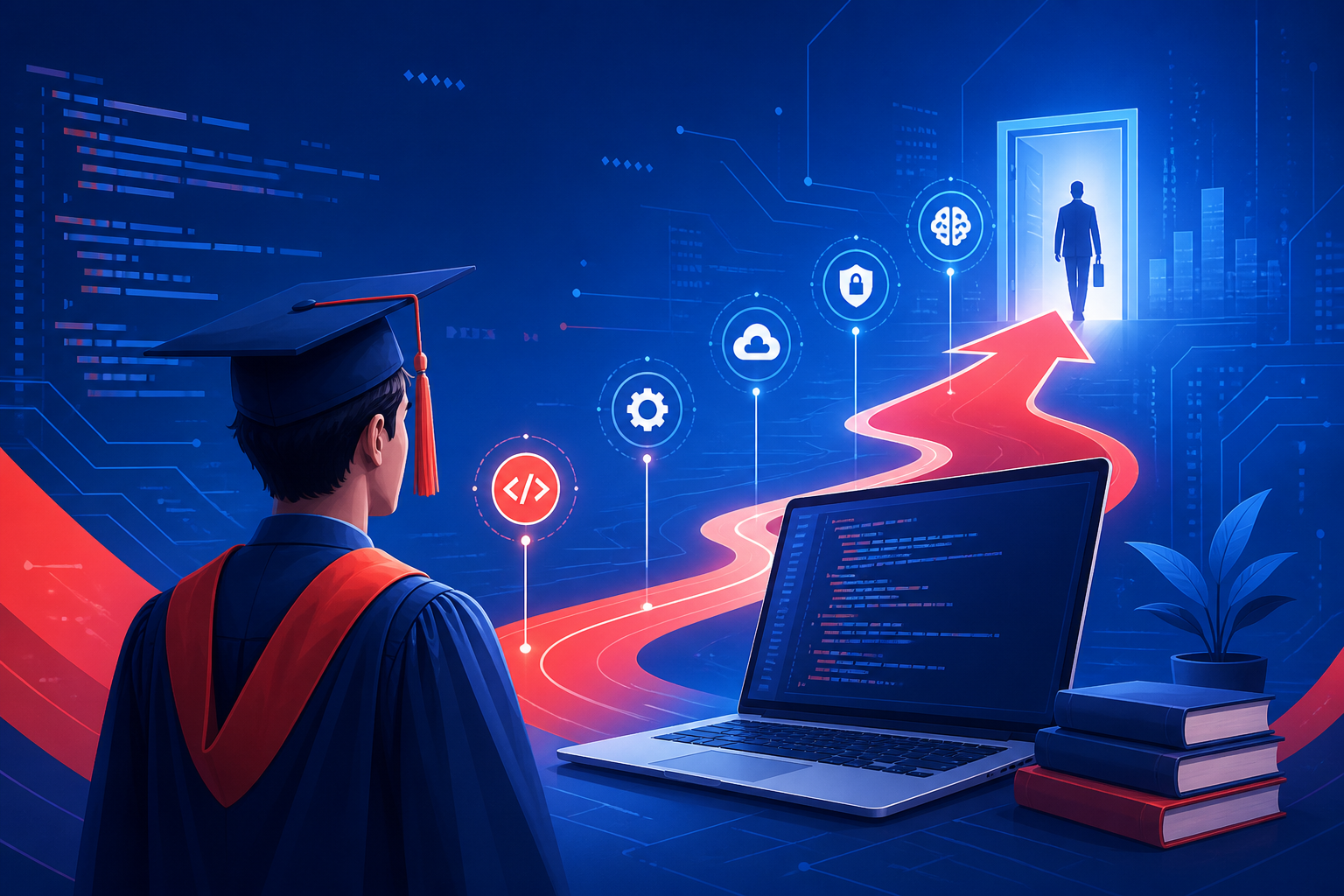
Best IT Courses After BTech: Choose a Career, Not Just Another Course
Completing a BTech degree is a proud milestone. After years of assignments, practical labs, examinations, and project submissions, you've finally earned your engineering degree.
But here's the reality that thousands of graduates experience every year.
You receive your degree, update your resume, apply to dozens of companies—and then... silence.
- No interview calls.
- No offers.
- No clear direction.
If this sounds familiar, you're not alone.
Many engineering graduates discover that while their degree provides theoretical knowledge, today's IT industry expects practical skills, hands-on project experience, problem-solving abilities, and familiarity with modern technologies.
The good news? You don't need another four-year degree.
You need the right IT course after BTech—one that bridges the gap between college education and industry expectations.
In this guide, we'll help you understand the best IT courses after BTech, who they're suitable for, expected salaries, career opportunities, and how to choose the one that aligns with your goals.
Why Many BTech Graduates Still Struggle to Get IT Jobs
The technology industry is evolving faster than traditional university curricula.
Companies today hire professionals who can:
- Build real applications
- Solve business problems
- Work with modern frameworks
- Collaborate using industry tools
- Deploy software confidently
- Learn continuously
This doesn't mean your BTech degree lacks value.
Instead, it means employers want candidates who combine engineering fundamentals with practical, job-ready skills. That is why specialized IT courses have become an essential career investment for many graduates.
Benefits of Joining an IT Course After BTech
Enrolling in a professional IT program can help you:
- Gain practical industry experience
- Work on
- Build an impressive portfolio
- Improve coding confidence
- Prepare for technical interviews
- Learn current technologies
- Increase employability
- Access placement assistance
- Build professional networks
Most importantly, it helps transform theoretical knowledge into practical expertise.
Best IT Courses After BTech in 2026
1. Full Stack Development
Full Stack Development remains one of the most sought-after career paths in the IT industry.
You'll learn:
- HTML
- CSS
- JavaScript
- React
- Node.js
- Express.js
- MongoDB
- APIs
- Git
- Deployment
Career opportunities:
- Full Stack Developer
- Web Developer
- Software Engineer
- Frontend Developer
- Backend Developer
Average salary depends on location, company, experience, and skills, with strong growth potential as your expertise increases.
2. Data Science
If you enjoy mathematics, statistics, and solving business problems using data, Data Science could be the ideal choice.
You'll learn:
- Python
- SQL
- Statistics
- Machine Learning
- Data Visualization
- Power BI
- Tableau
Career options include:
- Data Analyst
- Data Scientist
- Business Analyst
- AI Analyst
3. Artificial Intelligence and Machine Learning
AI is transforming healthcare, finance, education, retail, manufacturing, and cybersecurity.
Topics generally include:
- Python
- Machine Learning
- Deep Learning
- Neural Networks
- Natural Language Processing
- Computer Vision
- Generative AI
- Prompt Engineering
Career roles:
- AI Engineer
- Machine Learning Engineer
- AI Developer
- Research Engineer
4. Cloud Computing
Cloud platforms have become the backbone of modern businesses.
Learn technologies like:
- AWS
- Microsoft Azure
- Google Cloud Platform
- Docker
- Kubernetes
- Linux
- DevOps Fundamentals
Career options:
- Cloud Engineer
- DevOps Engineer
- Cloud Administrator
- Infrastructure Engineer
5. Cyber Security
With increasing cyber threats worldwide, organizations actively seek professionals who can protect digital infrastructure.
Key skills include:
- Ethical Hacking
- Penetration Testing
- Network Security
- Incident Response
- Security Auditing
- Risk Management
Career roles:
- Cyber Security Analyst
- Ethical Hacker
- Information Security Engineer
- Security Consultant
6. Software Testing & Automation
Software testing is much more than finding bugs.
You'll learn:
- Selenium
- Java
- Test Automation
- API Testing
- Performance Testing
- Agile Testing
Career options:
- QA Engineer
- Automation Test Engineer
- Software Test Analyst
7. DevOps Engineering
DevOps professionals help companies deliver software faster and more reliably.
Topics include:
- Git
- Jenkins
- Docker
- Kubernetes
- AWS
- CI/CD
- Linux
Career opportunities:
- DevOps Engineer
- Site Reliability Engineer
- Cloud DevOps Specialist
8. Python Programming
Python is among the most versatile programming languages.
It powers:
- Web Development
- Artificial Intelligence
- Data Science
- Automation
- Cyber Security
- Software Development
Learning Python opens multiple career pathways rather than limiting you to one specialization.
9. Java Development
Java continues to dominate enterprise software development.
You'll typically learn:
- Core Java
- Advanced Java
- Spring Boot
- Hibernate
- REST APIs
- Microservices
Career roles:
- Java Developer
- Backend Engineer
- Enterprise Application Developer
10. Mobile App Development
With billions of smartphone users worldwide, mobile applications continue to create exciting career opportunities.
Learn:
- Android
- Kotlin
- Flutter
- React Native
- Firebase
Career opportunities:
- Android Developer
- Flutter Developer
- Mobile App Developer
Which IT Course Is Best After BTech?
There isn't one perfect answer because every student's goals are different.
Choose based on your interests:
- Software Development → Full Stack Development
- AI & Innovation → Artificial Intelligence & Machine Learning
- Data & Analytics → Data Science
- Security → Cyber Security
- Infrastructure → Cloud Computing
- Enterprise Applications → Java Development
- Automation → DevOps
- Mobile Apps → Flutter / Android
The best course is one that matches both your interests and long-term career aspirations.
Skills Employers Value Beyond Technical Knowledge
Technical expertise alone is no longer enough.
Employers also appreciate candidates who demonstrate:
- Communication skills
- Team collaboration
- Analytical thinking
- Problem-solving ability
- Adaptability
- Time management
- Professional ethics
- Continuous learning mindset
Developing these qualities alongside technical skills can significantly strengthen your profile.
How to Choose the Right IT Training Institute
Before enrolling, consider whether the institute offers:
- Industry-aligned curriculum
- Experienced mentors
- Hands-on projects
- Capstone assignments
- Mock interviews
- Resume building support
- Placement assistance
- Internship opportunities
- Updated technologies
- Personalized mentorship
A quality learning experience focuses on practical application, not just classroom theory.
Common Mistakes BTech Graduates Should Avoid
Many graduates delay their careers by:
- Choosing courses solely based on trends
- Ignoring practical project work
- Skipping interview preparation
- Avoiding coding practice
- Not building a portfolio
- Depending only on certificates
- Expecting immediate high salaries without gaining experience
Remember, employers value demonstrated skills more than the number of certificates you hold.
Why Students Choose Coding Tutor
At Coding Tutor, we believe learning should mirror the workplace—not just the classroom. Our programs are designed to help students transition confidently into the IT industry through practical learning and mentorship.
Industry-Oriented Learning
Instead of focusing only on theory, students work on practical assignments and projects inspired by real business scenarios.
Learn by Building
Every concept is reinforced through coding exercises, project implementation, and continuous practice.
Mentorship from Experienced Professionals
Students receive guidance from mentors who understand industry expectations and help them develop both technical and professional skills.
Interview Preparation
Training includes:
- Resume Building
- Technical Mock Interviews
- Aptitude Preparation
- HR Interview Guidance
- Communication Skills
Career Support
Coding Tutor supports learners with career guidance, helping them prepare for opportunities in the software industry through structured learning and placement-oriented assistance.
Who Should Join These IT Courses?
These programs are suitable for:
- Final-Year BTech Students
- Recent Engineering Graduates
- Freshers Seeking IT Jobs
- Working Professionals Looking to Upskill
- Career Switchers Entering the IT Industry
How to Choose the Right IT Course After BTech
Before selecting any training program, ask yourself:
- Which technology genuinely interests me?
- Does the course include practical projects?
- Will I build a professional portfolio?
- Is interview preparation included?
- Will I receive mentorship throughout the learning journey?
- Does the curriculum reflect current industry practices?
Choosing a course aligned with your goals and learning style is more important than simply following market trends.
Final Thoughts
Your BTech degree is not the end of your learning journey—it is the foundation of your professional career.
If you're feeling uncertain because campus placements didn't go as planned or you're unsure about the next step, know that many successful IT professionals started from the same place. What often makes the difference is not just earning another certificate, but committing to practical learning, building real projects, and consistently improving your skills.
The technology industry continues to create opportunities for those who stay curious and adaptable. By choosing a course that aligns with your interests, practicing regularly, and developing both technical and professional skills, you can build a rewarding and sustainable career.
Remember, your first job doesn't define your future—your willingness to learn and grow does.