
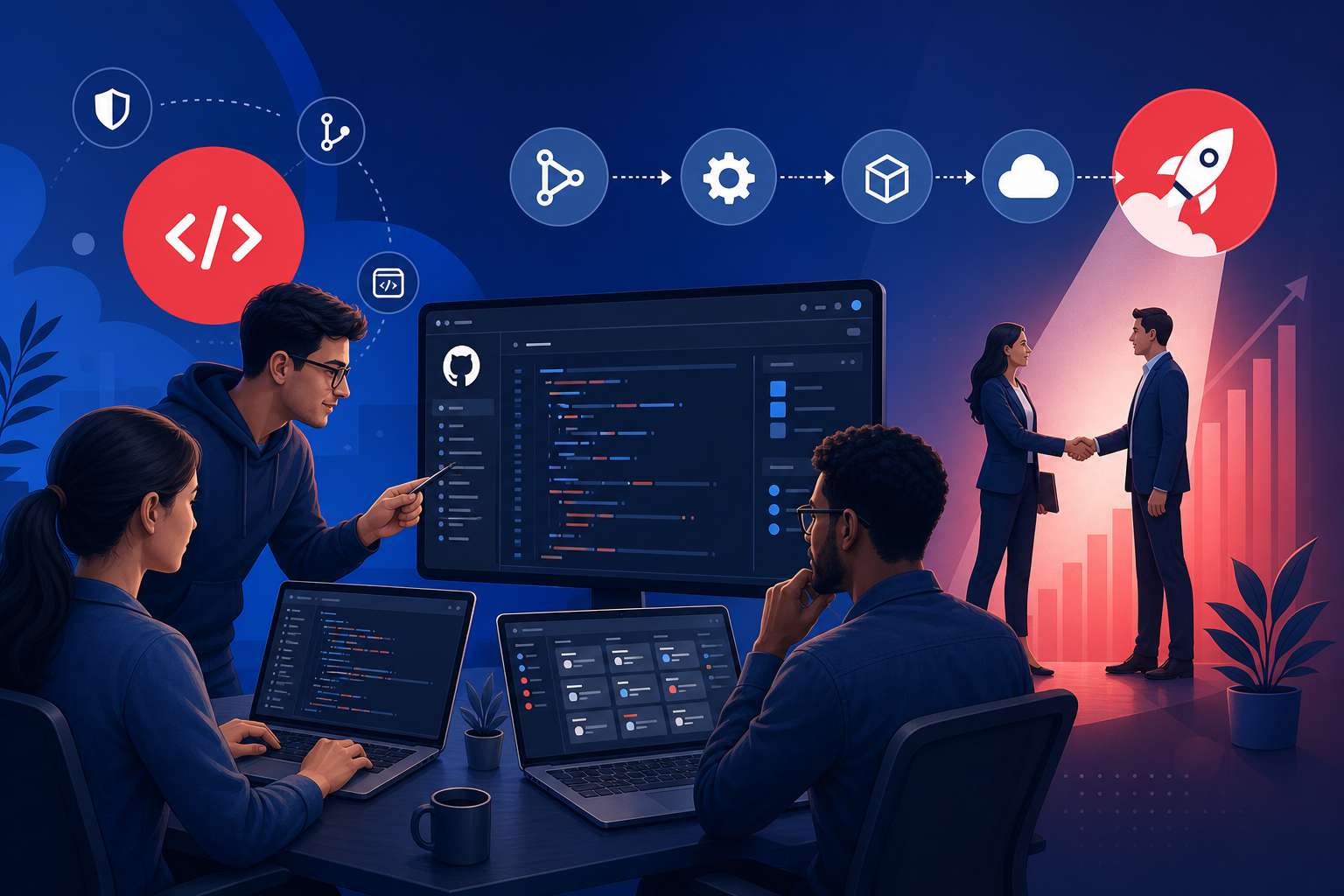
One of the biggest reasons freshers struggle during interviews is the lack of practical experience. While theoretical knowledge is important, employers prefer candidates who have worked on .
What Real-Time Projects Teach You
Professional Skills You Build
- Understanding client or product requirements
- Writing maintainable, production-style code
- Testing, debugging, and deployment basics
- Team collaboration and code reviews
Strengthen Your GitHub Portfolio
Projects also strengthen GitHub portfolios, which recruiters often review during the hiring process. Candidates who can explain project challenges and solutions stand out from the competition.
Stand Out in Technical Interviews
Interviewers frequently ask about projects you have built. Being able to walk through architecture decisions, bugs you fixed, and tools you used turns a generic resume into a credible hire.
Apply Projects Across Career Paths
Whether pursuing Java, Python, DevOps, or Generative AI, practical projects significantly increase your chances of securing a software engineering role.
If you want to understand the skills employers prioritize, read Top Skills Companies Look for in Freshers in 2026.
Real-world experience is often the missing link between education and employment. Learn more in Difference Between Training and Industry Experience.
Conclusion
Real-world experience is often the missing link between education and employment. Prioritize early—they accelerate learning and shorten your path to your first offer.