
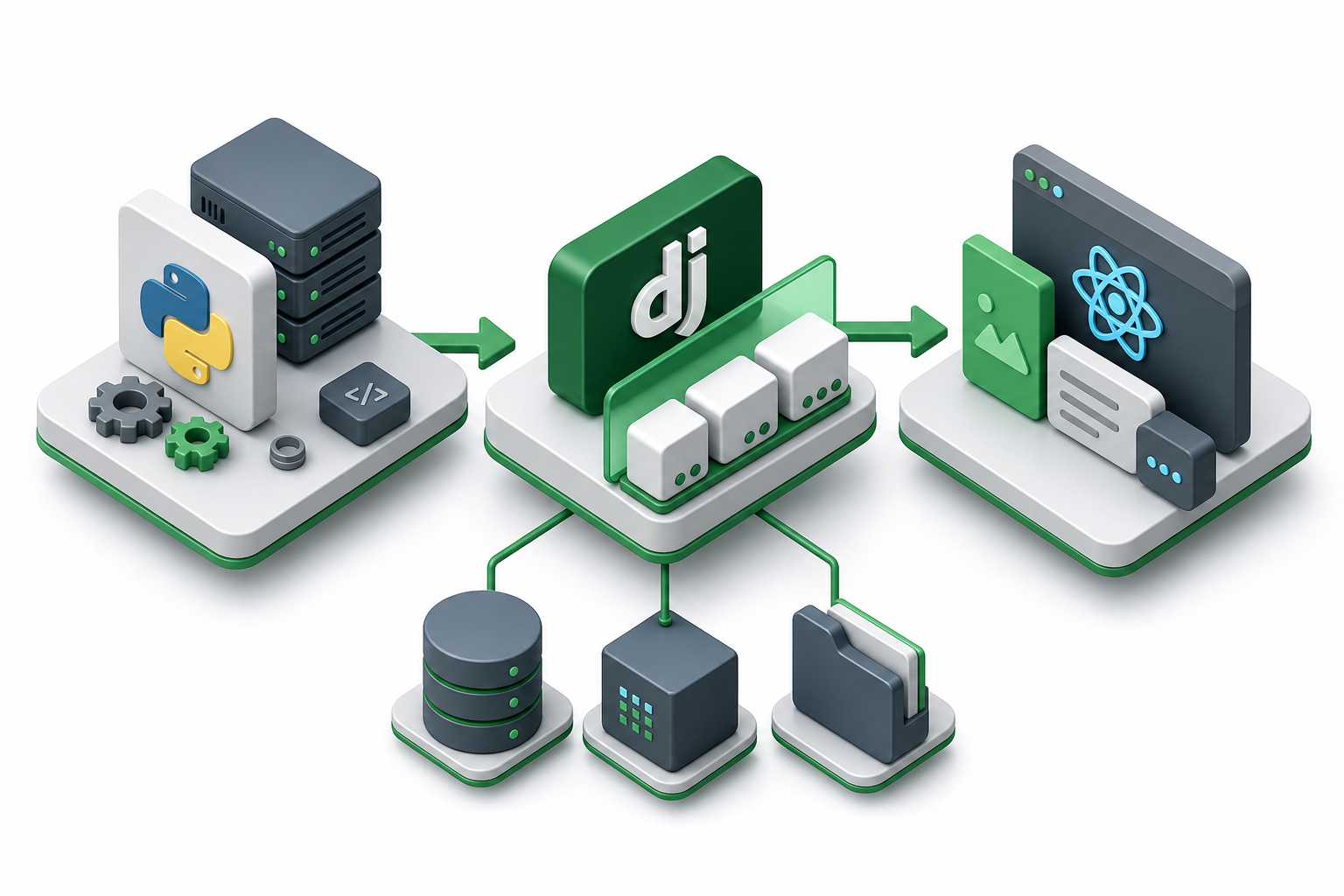
Python has become one of the most popular programming languages due to its simplicity and versatility. From web development to AI applications, Python offers diverse career opportunities.
Step 1: Python Fundamentals
Start by learning Python fundamentals, including variables, functions, object-oriented programming, and data structures. A clear foundation accelerates everything that follows.
Core Python Topics
- Variables, data types, and control flow
- Functions and modules
- Object-oriented programming
- Data structures and file handling
Step 2: Backend Frameworks
The next step is mastering frameworks like Django and Flask for backend development—building APIs, handling databases, and structuring scalable applications.
Step 3: Frontend Technologies
Frontend technologies such as HTML, CSS, JavaScript, and React complement Python backend skills, enabling developers to build complete web applications.
Step 4: Industry-Ready Skills
To become industry-ready, students should learn Git, GitHub, APIs, databases, and cloud deployment. Working on practical projects significantly improves confidence and interview performance.
Read How Real-Time Projects Help You Get Hired Faster to understand why projects matter.
Skills Over Degrees
Since companies prioritize skills over qualifications, explore Why Degrees Alone Don't Get You Hired Anymore to understand today's hiring trends.
Explore Related Career Paths
If you are interested in automation, cloud computing, and infrastructure management, check out our DevOps Engineer Career Path for Beginners.
Conclusion
Python Full Stack Development provides excellent career prospects for freshers willing to build practical expertise and continuously upgrade their skills.